Data reaches the ground too late
Downlink, routing, and post-processing add latency when every minute affects response quality.
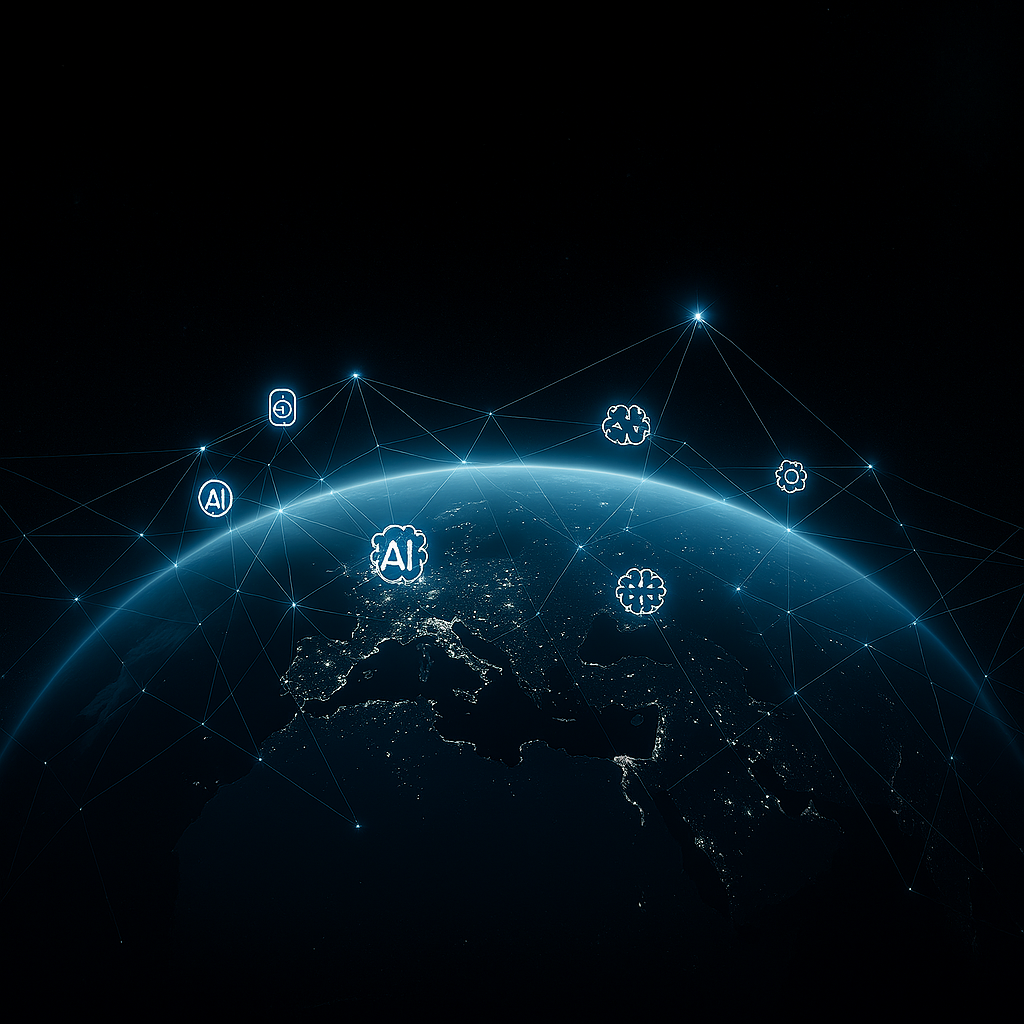
LeoTrek is building a distributed platform for AI workloads across low Earth orbit satellite clusters, so wildfire monitoring and other time-critical observation missions can move from raw data to action in minutes.
Deploy models, fuse sensing modalities, and prioritize urgent insights before full downlink.
Earth observation creates enormous value only when it arrives soon enough to change a decision. LeoTrek shifts compute closer to the sensor so satellite missions can support fast-moving events, persistent regional awareness, and new space-native software workflows.
Downlink, routing, and post-processing add latency when every minute affects response quality.
Coordinate AI workloads directly across LEO assets and prioritize what matters most.
Deliver faster alerts, compressed insights, and better use of limited bandwidth.
The same architecture fits disaster response, infrastructure monitoring, and other urgent EO workloads.
Wildfires are the clearest example of why orbital compute matters. When insight arrives late, damage compounds across human safety, infrastructure, and climate.

Smoke exposure and damaged infrastructure already turn each fire season into a public-health and budget crisis.

Larger burn areas and massive CO2 release show these events are compounding, not stabilizing.
Detection latency changes containment options, dispatch quality, and how much land is ultimately lost.
More sensors, stronger onboard compute, and pressure for faster response make this the right moment to move EO intelligence from batch pipelines toward space-native execution.
LeoTrek is designing a space-native orchestration layer for deploying, scheduling, and validating EO workloads across available orbital compute.
Run inference, filtering, and prioritization directly across orbiting satellite clusters, so urgent compute happens before full downlink.
Keep continuity over fixed areas of interest and surface time-critical events as new passes occur.
Coordinate tasks across the constellation and combine thermal, optical, and contextual streams into one decision layer.
Deploy models and workflows through a consistent interface instead of rebuilding software for each mission profile or satellite configuration.
Model mission logic, workload placement, and orbital constraints before deployment so teams can validate latency, throughput, and failure behavior earlier.
Prepare inference pipelines with pruning, quantization, and deployment-ready tuning so models fit onboard constraints without custom tooling each time.
Preview orbit nodes, workflow placement, and computation moving inside the target area before live deployment.
Operators with software-defined satellites can use LeoTrek to expose spare in-orbit capacity through a multi-tenant AI-as-a-service model without disrupting primary missions.
Service providers that need EO insights fast enough to support operational decisions while satellite data is still time-critical.
LeoTrek connects both sides: EO providers deploy workflows through a cloud-like interface, satellite operators supply the compute layer, and LeoTrek handles orchestration across available capacity.
Wildfire monitoring is the immediate wedge, but LeoTrek is relevant wherever Earth observation decisions are time-sensitive and bandwidth is scarce.
Prioritize hotspots, fire spread indicators, and response-relevant updates without waiting for full raw-data transfer.
Support floods, storms, and post-event damage assessment with faster orbital analytics.
Monitor energy, transport, and industrial systems where earlier anomaly detection improves maintenance, planning, and incident response.
Maintain regular visibility over locations of interest and detect meaningful change over time instead of treating every pass as an isolated event.
LeoTrek builds on published work in scheduling, serverless workflows, simulation, cost modeling, and hardware acceleration for AI workloads.
Scheduling serverless functions across orbital and ground-adjacent compute layers. IEEE/ACM SEC, 2024.
Read paperA scalable simulator for multi-layer distributed computing environments. IEEE EDGE, 2025.
Read paperA continuous data path for serverless workflows across distributed compute tiers. Journal of Systems Architecture, 2025.
Read paperA cost model for serverless workflows spanning multiple compute layers. IEEE SmartComp, 2025.
Read paperHybrid hardware acceleration for serverless AI in distributed compute environments. IEEE/ACM BDCAT, 2025.
Read paperA compound AI approach to distributed vehicle trajectory reconstruction. International Conference on the Internet of Things, 2025.
Read paper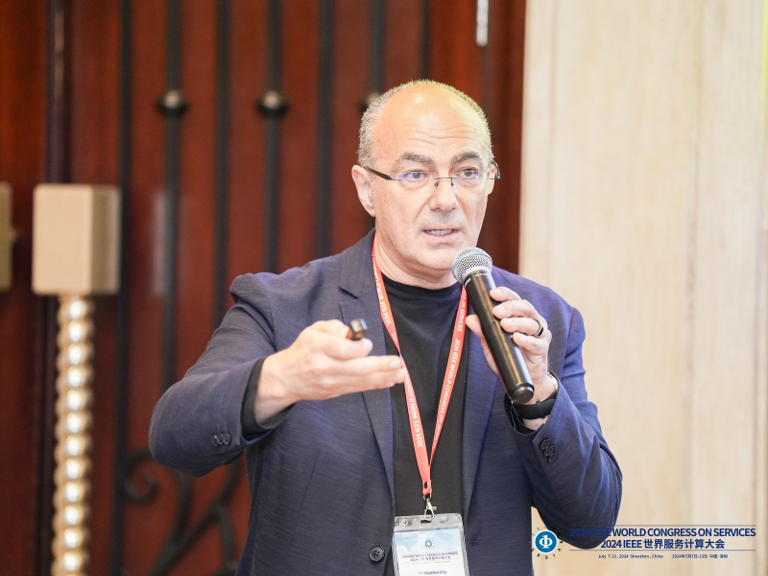
Full Professor and Head of the Distributed Systems Group at TU Wien, internationally recognized for his work in distributed systems, Edge-Cloud Continuum, Edge AI, and next-generation computing continuum.

Expert in Earth Observation, geospatial interoperability, and operational meteorological systems, with leadership roles at the Open Geospatial Consortium and the Group on Earth Observations.
LeoTrek is interested in pilot deployments, operator partnerships, commercial validation, and research collaboration around time-critical orbital intelligence.
Part of the European deep-tech ecosystem